

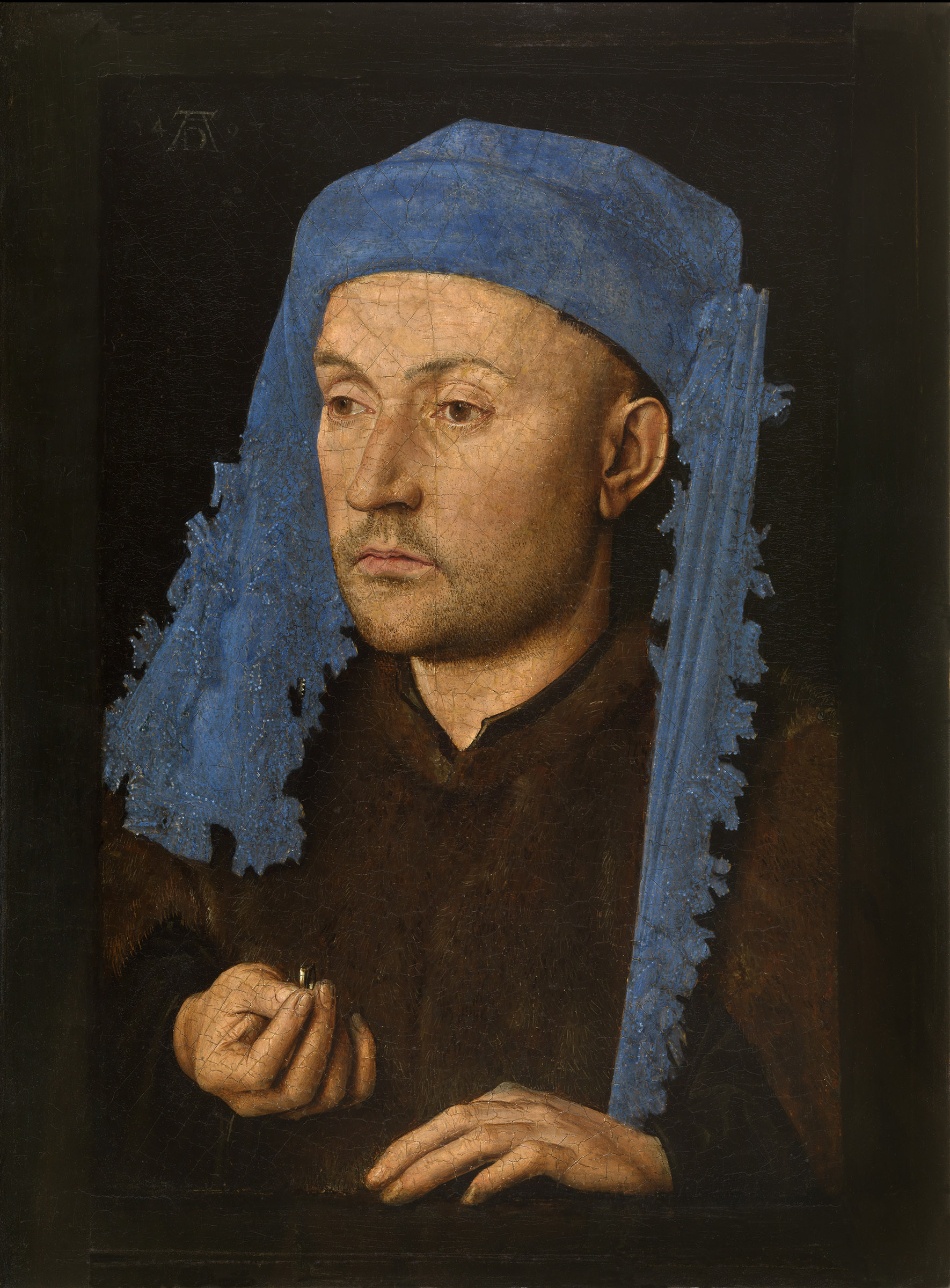
Stand close to a painting by Jan van Eyck and something strange happens. The surface seems to dissolve. A ruby appears to hold a spark of light deep inside it; a velvet sleeve has a bloom you feel you could brush with a fingertip; a face carries the soft translucence of actual skin, with blood somewhere beneath the surface rather than paint laid on top of it. Nearly six centuries after he worked in Bruges, Van Eyck’s pictures still produce a sensation few later painters have equalled — a feeling of depth, of looking into a scene rather than at it. The secret is not a lost formula or an alchemist’s trick. It is glazing, and understanding how it works explains both why his panels are so extraordinary and why they are so difficult to imitate.
A glaze is a thin, transparent layer of oil paint. Instead of mixing a colour to its final appearance on the palette and applying it in one opaque stroke, the glazing painter builds a passage out of many translucent films, each allowed to dry before the next is laid over it. Light travelling into such a passage does not stop at the surface. It passes through the upper glazes, strikes the pale ground or an underlayer beneath, and reflects back out through all those coloured films again. The colour you see is not on the panel; it is generated inside it, in the space between layers. This is why a Van Eyck red glows like stained glass rather than sitting flat like a wall of house paint. The picture is lit from within because the physics of the paint make it so.
You can watch this principle at work across his surviving masterpieces. In the Arnolfini Portrait of 1434, the single most discussed picture of the Northern Renaissance, glazing renders a whole inventory of different materials in convincing dimension — the deep green wool of the woman’s gown, the fur trim, the polished brass of the chandelier, the oranges on the sill catching light, and, at the centre, the famous convex mirror reflecting the entire room in miniature, each detail built from transparent layers rather than opaque description. In the vast Ghent Altarpiece, completed in 1432, the jewels in the copes and crowns seem to hold actual fire, and the distant landscape recedes through cool glazes into genuine atmosphere. These are not tricks of drawing; they are the optical consequence of layering transparent colour over a luminous ground, so that light does the describing.
Van Eyck’s mastery began with what he put under the colour. Flemish panels of his era were prepared with a brilliant white ground of chalk and glue, smoothed to an almost porcelain finish. That white acts like the backing of a mirror, throwing light forward through every glaze above it. On top, the underdrawing and initial modelling established the forms in muted tones. Only then came the glazes, sometimes many of them, gradually deepening shadows, warming flesh, saturating a fabric. Each layer was mostly medium — oil, perhaps with a little resin — carrying just enough pigment to tint the light. The slowness of oil, its refusal to dry in an hour the way tempera does, is precisely what made this possible. The painter had time, and time is what the technique demands.
Part of why his work “remains unmatched” is that this method is punishingly patient. A single face might require weeks, because each glaze must dry before the next, and a mistake buried three layers down cannot simply be scraped off without disturbing everything above it. There is no shortcut and very little room for improvisation. The nineteenth and twentieth centuries, with their taste for spontaneity, direct alla prima painting, and visible brushwork, largely abandoned this way of working. Impressionism, which prized the fleeting effect caught in one sitting, is in a sense the exact opposite philosophy: paint the light you see now, quickly, rather than construct light slowly out of transparent layers. Both are legitimate, but they produce different kinds of luminosity, and only one of them yields the deep, glassy Eyckian glow.
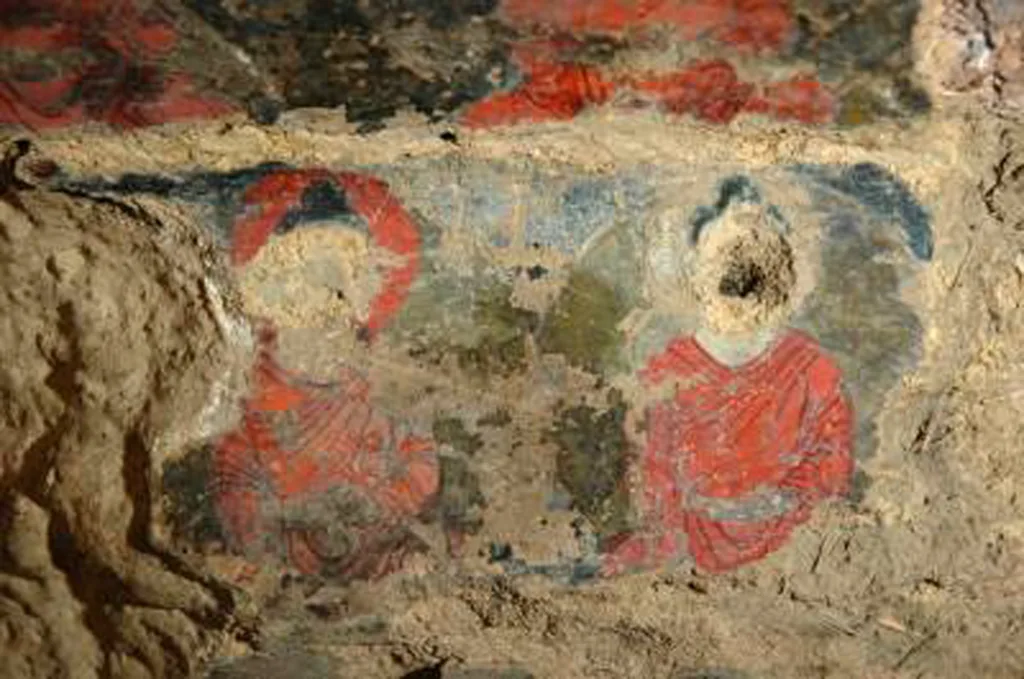
There is a persistent myth that Van Eyck invented oil paint. As the previous essay in this collection describes, oil binders were used centuries earlier, as far away as the Bamiyan caves. What Van Eyck perfected was the system: the bright ground, the disciplined sequence of transparent layers, the control of drying oils to a degree that let him render textures no one had achieved before. He did not discover the material. He discovered what the material could be made to do when handled with unprecedented rigour and patience.
Modern science has confirmed how sophisticated that handling was. Analyses of his panels reveal carefully chosen pigments layered in deliberate optical sequences — a lake pigment glazed over vermilion to build a red of impossible richness, or thin greens and browns modelling a landscape that recedes into genuine atmospheric distance. He understood, without any of our chemistry, that certain pigments are naturally transparent and suited to glazing while others are opaque and belong in the underlayers. He was, in effect, running an optical engine, and he tuned every part of it.
Why, then, have so few equalled him, even among painters who knew exactly what he did? Part of the answer is patience, but part is the loss of an unbroken workshop tradition. Van Eyck learned his craft in a culture where the preparation of grounds, the purification of oils, and the sequencing of glazes were transmitted hand to hand over generations of apprenticeship. As tastes shifted toward faster, more gestural painting in later centuries, that tacit knowledge thinned out. Nineteenth-century painters and Victorian revivalists who admired the early Flemish masters and tried to reconstruct their glow often produced works that darkened, yellowed, or grew muddy within decades, partly because they misjudged the oils, the driers, or the order of layers, and partly because they reached for shortcuts — bituminous browns, excessive medium — that Van Eyck never used. His luminosity turns out to depend on a whole system working together: the right transparent pigments in the right sequence over the right ground, each layer sound and fully dried. Get one element wrong and the internal light goes out. That fragility of the recipe, as much as the patience it demands, is why his surfaces remain a benchmark rather than a repeatable formula.
For a contemporary viewer, the practical lesson is about how to look. Van Eyck rewards slowness and proximity in a way that reproductions cannot fully convey, because a printed image flattens exactly the layered depth that is the whole point. This is one of the quiet arguments for seeing paintings in person, in a gallery, under good light: the glaze effect is spatial and reflective, and it changes as you move. A photograph freezes one angle of one lighting condition. The panel itself keeps giving.
And for anyone drawn to oil painting today — whether as a collector or a maker — Van Eyck sets a standard that is less about copying his subjects than about respecting his principle. Depth in oil is built, not applied. It comes from patience, from letting light do the work, from trusting thin transparent layers over thick opaque ones. Painters who learn to glaze, even in a small way, discover that their colours suddenly acquire a life that direct mixing never gave them. That living quality is Van Eyck’s real bequest, and it is why, half a millennium on, we still speak of his glazes as a secret — not because it is hidden, but because so few have the patience to keep it.