

A gallery is easy to misunderstand from the outside. It can look like a shop that happens to sell pictures, or a quiet room you are slightly afraid to enter for fear of not knowing the rules. Both impressions miss what a gallery actually is at its best: a space of discovery, where centuries and media and price points sit side by side, and where anyone — the seasoned collector and the curious first-time visitor alike — can wander, look, learn, and find the piece that speaks to them. The particular magic of a gallery that holds oil classics, acrylic experiments, and prints under one roof is that it lets you travel across the whole story of painting in a single afternoon, and to enter it at whatever door suits you.
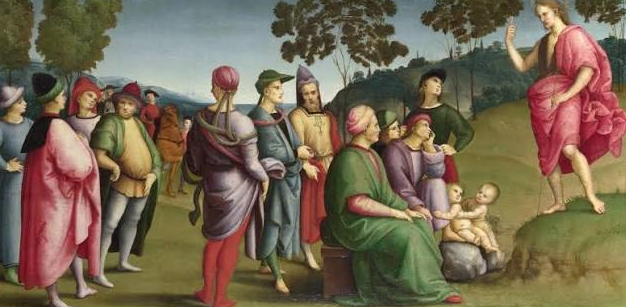
Consider what it means to have these three worlds in one place. In the oil paintings hang the deep tradition explored across this collection — the glowing glazed depth descended from Van Eyck, the psychological presence that the shift from tempera to oil made possible, the slow luminous craft that connects a contemporary oil painter all the way back, astonishingly, to the drying oils of the Bamiyan caves. Oil is the medium of patience and permanence, of light built up in layers, and standing before a good oil canvas you feel the weight of five centuries of refinement. It is the classical anchor of any collection, the thing that has always meant “painting.”
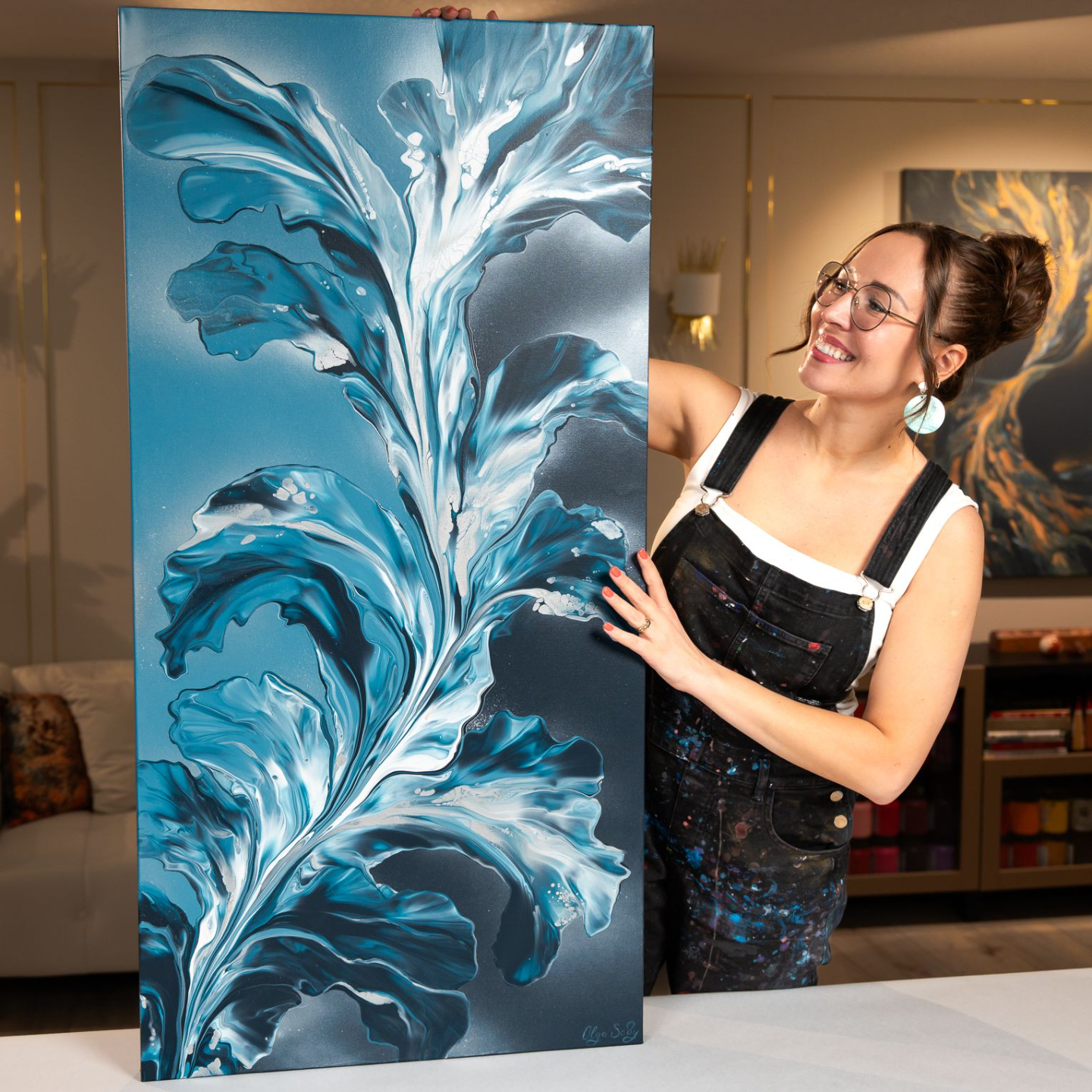
Turn a corner and you meet the acrylics, and with them a completely different energy — the modern, experimental spirit that this collection traces through Frankenthaler’s soak-stains, the flat luminous fields of Color Field painting, the bold graphic surfaces of Pop, and the flowing cells of contemporary fluid art. Acrylic is the medium of the twentieth and twenty-first centuries, of speed and water and plastic and bright modern colour, of artists pouring and staining and experimenting with what paint can be. Where oil whispers of tradition, acrylic often speaks of now. To see the two in the same building is to feel the living conversation between where painting came from and where it is going.
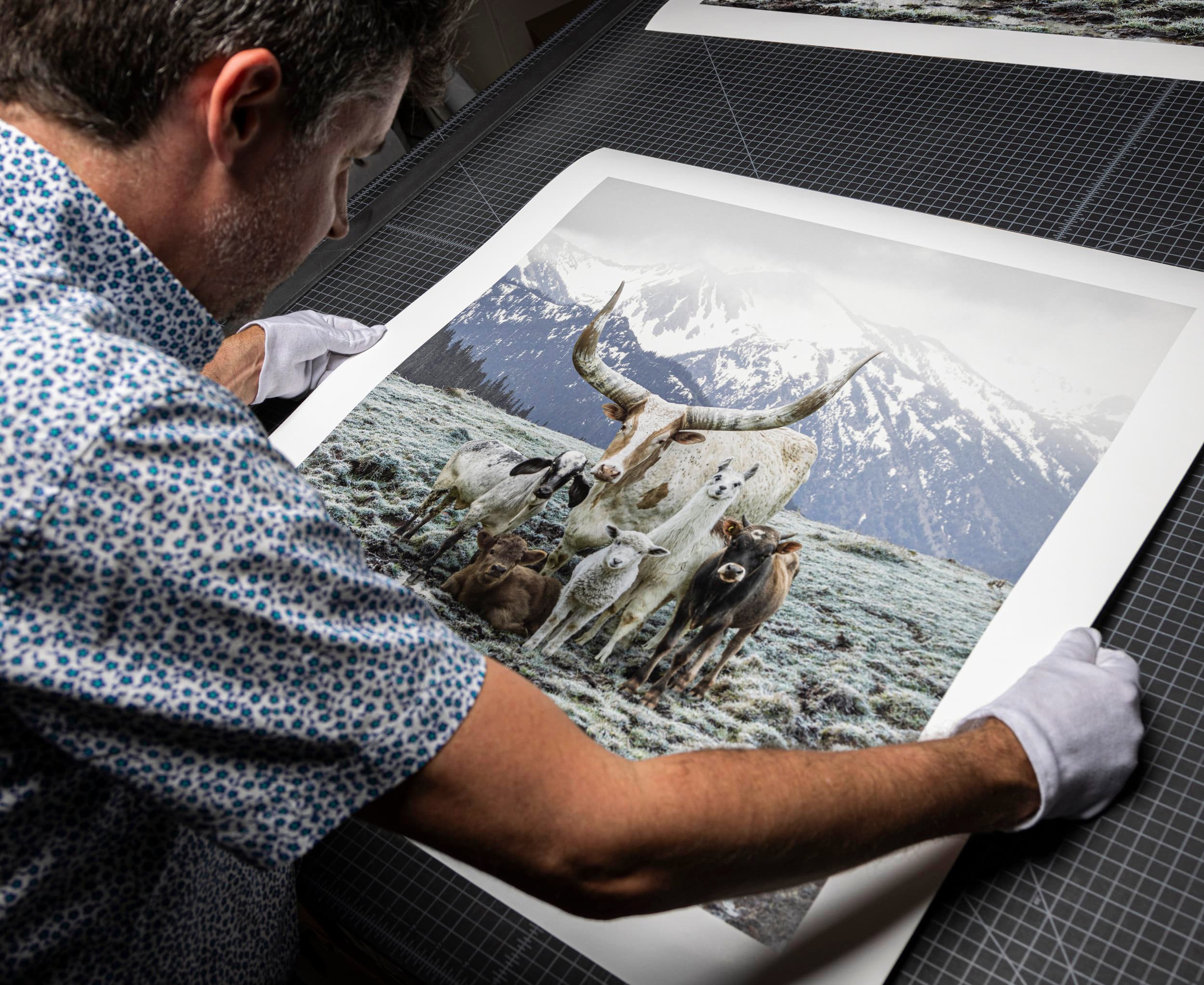
And then the prints, which open the door widest of all. Here are the etchings and silkscreens and lithographs that are original artworks in their own right, the signed and numbered limited editions, the archival giclées that preserve a beloved image in colours built to last for decades. The prints are where the gallery becomes genuinely accessible — where a new collector or a thoughtful gift-giver can own real, artist-made work without a collector’s budget, and where the democratic legacy of Warhol’s silkscreen lives on. A wall of prints says, in effect, that art is for everyone, and that the pleasure of owning something beautiful and authentic is not reserved for the wealthy.
The point of gathering all three under one roof is not merely convenience. It is that the juxtaposition teaches you to see. Walk from an oil portrait to an acrylic abstraction to a silkscreen edition and the differences stop being abstract; you feel in your own eyes what glazed depth is, what a stained field is, what flat graphic colour is, because you can compare them in the space of a few steps. A gallery organised this way is a kind of living textbook, except that nothing is behind glass in a distant museum — every lesson is a real object you can stand close to, respond to, and, if it moves you, take home. The essays in this collection are the words; the gallery is where the words become things you can see.
This is why the idea of discovery is the right one. Discovery implies that you do not arrive knowing exactly what you want, and that the finding is part of the pleasure. In a gallery that spans media and eras, you are free to be led by your eye rather than by a category. You might come in thinking you want a traditional oil and leave with a fluid acrylic that stopped you in your tracks, or arrive intending to browse prints and fall unexpectedly for a small original. The range is what makes this possible. A narrow shop can only confirm what you already knew you liked; a broad, generous gallery can surprise you, and being surprised is how taste grows.
It matters, too, that a gallery like this is a welcoming place rather than an intimidating one. The old image of the hushed, exclusive gallery where only serious money is taken seriously does real harm, because it keeps people away from something that is genuinely for them. A gallery that puts million-dollar craft and affordable prints in the same room is quietly making a statement: that there is an entry point here for you, whoever you are and whatever your budget, and that the staff are there to share what they know rather than to judge what you can afford. The best galleries are as happy to help a nervous first-time visitor choose a twenty-euro card as to place a major oil, because they understand that today’s card-buyer is tomorrow’s collector, and that the love of art is the thing worth cultivating.
It is worth dispelling a few myths that keep people at the door, because they are precisely the myths this kind of gallery exists to overturn. You do not need to be an expert to visit; curiosity is the only qualification, and the staff would far rather explain a technique than test your knowledge. You do not need to intend to buy; browsing is not only permitted but welcomed, and many lifelong relationships with a gallery begin with an aimless, delighted wander. You do not need a large budget; the presence of prints and small works means there is almost always something within reach, and no one worth dealing with will make you feel otherwise. And you do not need to hurry — a gallery is one of the few public spaces designed for unhurried looking, where lingering in front of a single picture is exactly the point rather than an imposition. The room is an invitation, not an examination.
Seen as a whole, a gallery spanning these three media offers something close to a complete education in how images are made and valued, delivered not as a lecture but as an experience you move through at your own pace. The oils teach you what centuries of patient craft can do with light; the acrylics show you how a modern medium set painting free to experiment; the prints reveal how art becomes shareable, collectible, and affordable without ceasing to be authentic. Each answers a question the others raise, and together they compose a single conversation across time. To walk the room attentively is to absorb, almost without effort, the very history this collection of essays has tried to tell in words.
For the visitor, then, the invitation is simple: come in, and take your time. Look at the oils and let the glazed light do its slow work on you. Stand in front of the acrylics and feel the modern nerve of them. Leaf through the prints and discover how much authentic art is within your reach. Ask questions — galleries exist to answer them. Whether you leave with a masterwork, a small signed print, a gift for someone you love, or simply a richer eye and an afternoon well spent, you will have done the thing a gallery is truly for. Under one roof, oil classics, acrylic experiments, and prints together tell the whole story of how images are made and shared, and a gallery is the rare place where you can walk right into that story and find your own place in it.