

Sometimes a change in the world of art looks like a change of style — a new taste, a new fashion, a new set of ideas. But some of the deepest transformations begin with something far more humble: a change of material. The move from egg tempera to oil paint, unfolding across the fifteenth to seventeenth centuries, is one of these. It did not merely give painters a new tool. It rewired what a painting could be, and nowhere is that rewiring more visible than in the portrait, where the shift turned stiff, emblematic likenesses into breathing human presences.
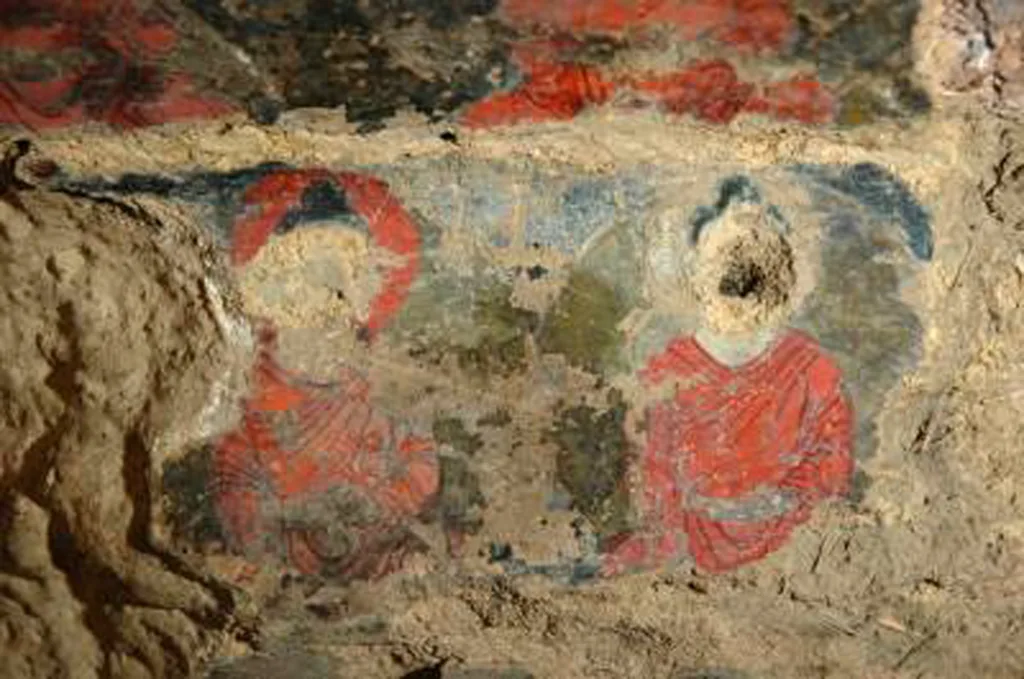
To understand the transformation you have to understand what tempera actually was, and what it could not do. Tempera is pigment bound in egg yolk, thinned with water. For a thousand years it was the standard medium of European panel painting, and in the right hands it is capable of exquisite refinement — the luminous gold-ground altarpieces of the early Italian masters are tempera. But tempera has a temperament. It dries almost instantly, which means colours cannot be blended on the panel; a painter builds tone through fine cross-hatching of tiny separate strokes, the way an engraver builds shadow with lines. Transitions are therefore difficult. Soft, imperceptible gradations — the very thing a human face is made of — must be simulated stroke by tiny stroke. Tempera also dries to a relatively pale, matte, cool surface, and its range from lightest light to darkest dark is comparatively narrow. The result, in portraiture, tends toward the linear and the idealised: clear contours, even light, a certain flatness of modelling. Beautiful, but more emblem than individual.
Oil changed every one of these constraints. Because oil dries slowly, wet paint can be blended into wet paint directly on the surface, so that one tone melts into the next with no visible boundary. This single property is what makes convincing flesh possible — the soft turn of a cheek into shadow, the almost invisible transition from lit forehead to temple. Oil also carries a far wider tonal range; it can go to a deep, saturated, transparent dark that tempera simply cannot reach, and that deep dark is what gives a portrait the drama of real light falling in a real room. And oil can be glazed, layered transparently, so that skin acquires the inner glow discussed elsewhere in these essays. Put simply, oil could describe a particular person under particular light, with all their asymmetry and warmth, in a way tempera never could.
The transition was not instant, and it was not a clean replacement. Early Netherlandish masters such as Jan van Eyck and Rogier van der Weyden were already exploiting oil’s possibilities in the first half of the fifteenth century, producing portraits of startling individuality — a specific merchant, a specific wife, rendered with the pores and stubble and slightly weary eyes of an actual human being. In Italy, painters continued in tempera longer, and for a time worked in mixed technique, laying oil glazes over a tempera underpainting to get the best of both: the crispness of tempera drawing beneath, the depth of oil above. Antonello da Messina is traditionally credited with helping carry the fully oil-based Flemish approach into Italy in the later fifteenth century, and from there it spread. By the time of the High Renaissance, oil was the ambitious painter’s default.
The transition also owed a great deal to who was paying for pictures and why. The fifteenth century saw the rise of a wealthy merchant and banking class in the cities of Flanders and Italy — people who were not saints or kings but who wanted, increasingly, to be seen, remembered, and recorded as the particular individuals they were. Oil’s capacity for specific likeness met this new demand precisely. A prosperous couple could commission a portrait that captured not a generic type but their own faces, their fine clothes, the exact textures of their prosperity, in a medium that made those textures gleam convincingly. The rise of the individual sitter and the rise of oil are, in this sense, two sides of one social change: a growing world of private patrons who wanted painting to hold a mirror to real life. Nor was one of the greatest exploiters of the new medium a portraitist by trade — Leonardo da Vinci used oil’s slow drying and blendability to develop sfumato, the smoky, edgeless transition of tone that gives the Mona Lisa her elusive, living presence. That most famous of all faces, hovering between expressions, is unthinkable in tempera; it is a demonstration of what oil’s soft, blended shadow could do that no earlier medium could.
What did this mean for the sitter — the person in the portrait? It meant, above all, the arrival of interiority. A tempera portrait tends to present a role: the donor, the saint, the noblewoman, shown in profile like a coin, timeless and composed. An oil portrait can present a psychology. Because the medium could capture the subtle asymmetries of a real face and the specific fall of light across it, painters began to turn their sitters toward us, to catch a glance, to model the soft tissue around the eyes and mouth where human expression actually lives. The three-quarter view, difficult to model convincingly in tempera, became standard. Sitters acquired moods. By the sixteenth and seventeenth centuries this had matured into the full psychological portrait — Titian’s worldly, sensuous grandees; the unflinching self-scrutiny of Rembrandt, who across a lifetime of self-portraits used oil’s depth and blended shadow to paint not just his changing face but his changing spirit.
Rembrandt is the culmination worth pausing on, because his portraits are almost inconceivable in any earlier medium. His technique ranges from thin, smooth passages in the shadows to thick, loaded, textured paint in the highlights — a nose or a lace collar built up in ridges that catch the actual light of your room. He let large areas fall into a warm, transparent darkness out of which a face emerges, lit as if by a single candle. That contrast of deep glazed dark and heavily worked light is a purely oil possibility. It is the technical foundation of his emotional power: the sense that we are seeing a real person at a real moment, caught between the light and the dark, is produced by the physical behaviour of oil paint.
The tempera-to-oil shift is therefore a case study in how materials and meaning are entangled. New content — the individual human being, observed and psychologically present — did not simply arrive because the Renaissance decided people mattered. It became paintable because a new medium could describe soft light on living flesh. The idea and the material rose together. When we admire the great portraits of the fifteenth through seventeenth centuries and feel that we are meeting actual people across the centuries, we are, in part, feeling the difference between egg and oil.
It is worth noting how gradual and layered the change really was, because the popular image of oil suddenly “replacing” tempera flattens a subtler story. For a long transitional period the two media coexisted within single paintings. A common Italian practice of the later fifteenth century was to lay in the composition with a tempera underpainting — quick-drying, precise, ideal for establishing drawing and pale modelling — and then to finish with oil glazes over the top, gaining the depth and blended transitions oil allowed while keeping the crisp foundation tempera gave. Painters also learned to manage oil’s quirks with additives and grounds, adjusting drying times and building panels in careful strata. This mixed technique was not indecision; it was intelligent craft, taking the best of each medium during the decades when oil’s full possibilities were still being mapped. Only over generations did pure oil painting, worked wet-in-wet from start to finish, become the confident default that Titian and later Rembrandt would command.
For a collector or a visitor, this history sharpens the eye. Look at an early tempera portrait and a mature oil portrait side by side and you can read the whole revolution in a few square inches of a cheek: hatched, cool, and linear in the one; blended, warm, and dimensional in the other. The subject may be a person in both. Only in oil does the person seem about to speak.